Isola Della Musica
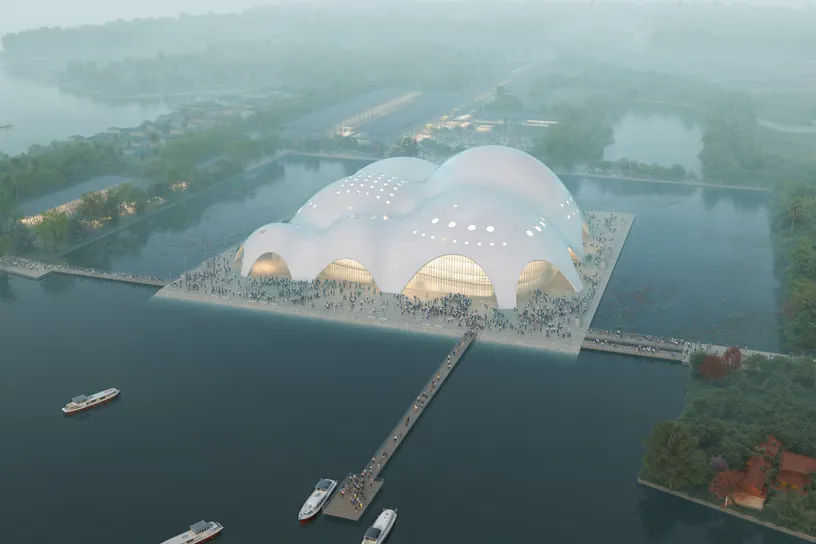
Isola Della Musica (IDM) is the name of the future venue planned to host the National Theater of Vietnam. The project includes an 1,800-seat Opera House, specifically designed for opera and philharmonic performances, alongside a 1,000-seat multifunctional hall adaptable to a wide range of programs. Both are to be located on an artificial island created on the eastern edge of Hanoi’s West Lake (Ho Tay). This new venue will be both integrated into the urban fabric and will serve as a cultural destination for the people of Trang An and visitors to Hanoi.
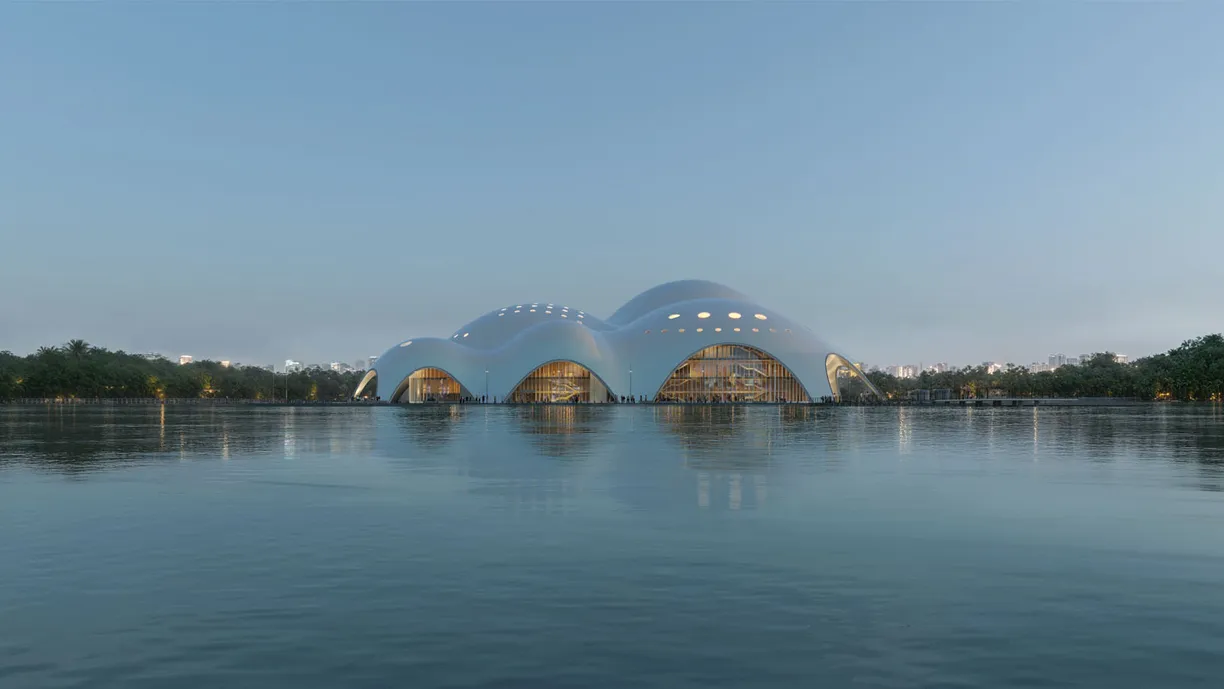
In September 2016, after visiting the RPBW office in Paris, Sun Group reaffirmed its intention to pursue the IDM project according to the firm’s original design, which was selected following a public competition in 2013. While the program remained largely unchanged, a new site was chosen: a triangular parcel of land separating West Lake from the smaller Dam Tri Lake. This developing area is notable for its temples, residential buildings, and generous green spaces. The site is part of the larger “Quang An Park Masterplan,” for which RPBW contributed to the area dedicated to cultural and leisure activities.
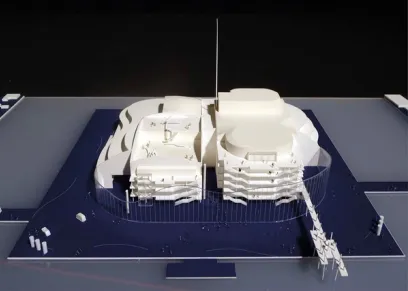
From the early stages, the site presented a geometric challenge, as it lacked sufficient space to accommodate the ambitious program. In response, the idea emerged of building the theater on a man-made square island between two natural peninsulas to the north and south. Connected to the mainland by light pedestrian bridges, the island offers a harmonious relationship with its surroundings, inviting a contemplative promenade.
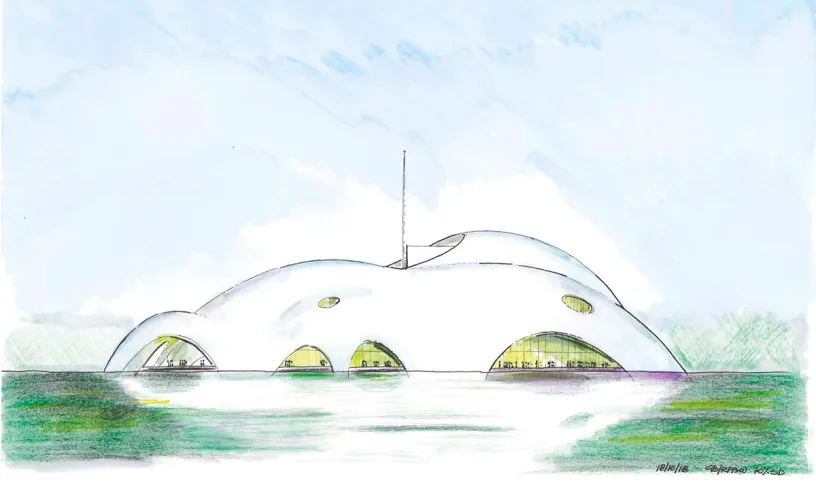
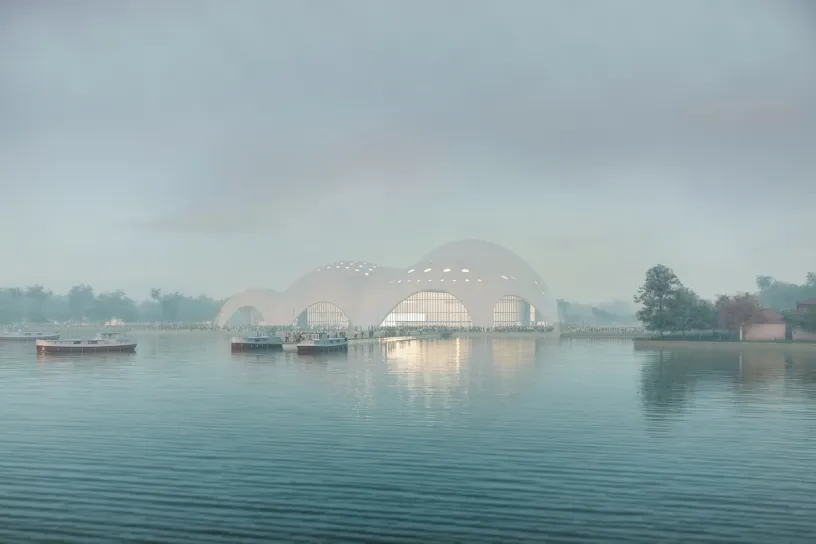
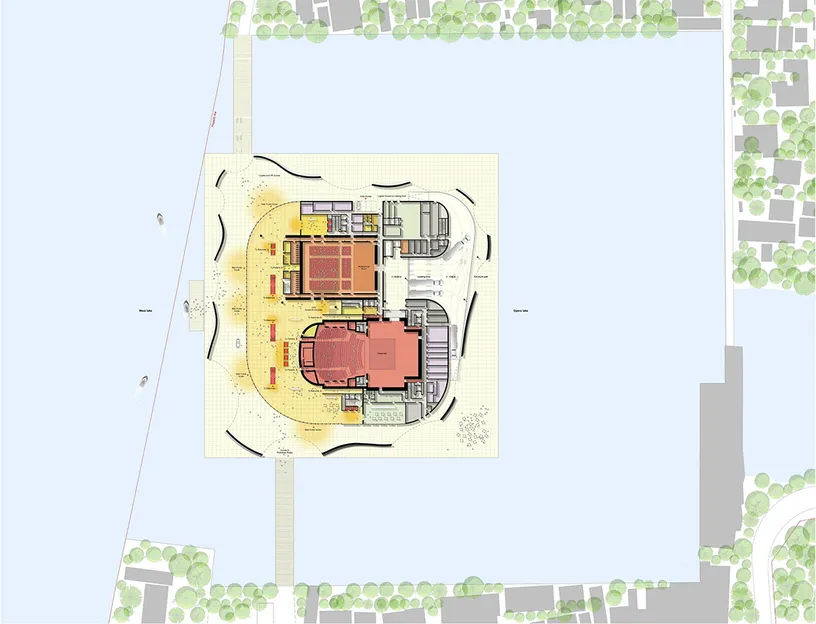
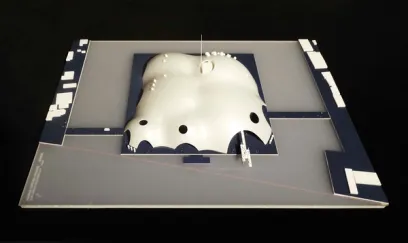
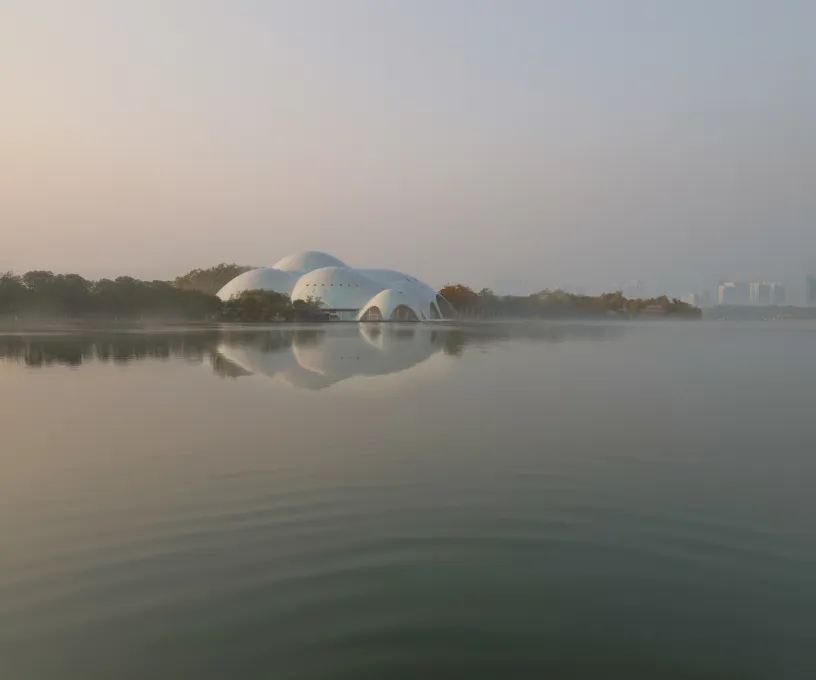
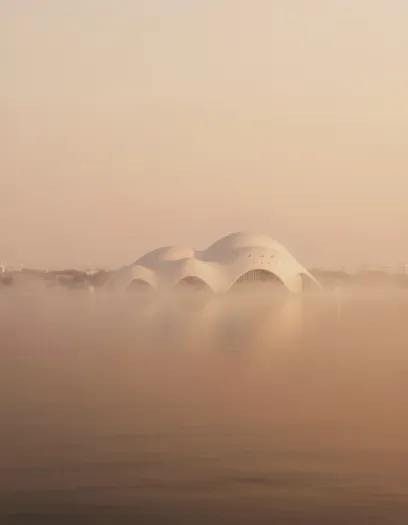
Water plays a vital role in the project’s identity. The building appears to emerge from the lake, reinforcing a symbolic and physical connection to the site’s history and landscape, while maintaining the scale and mass necessary for a performing arts center.
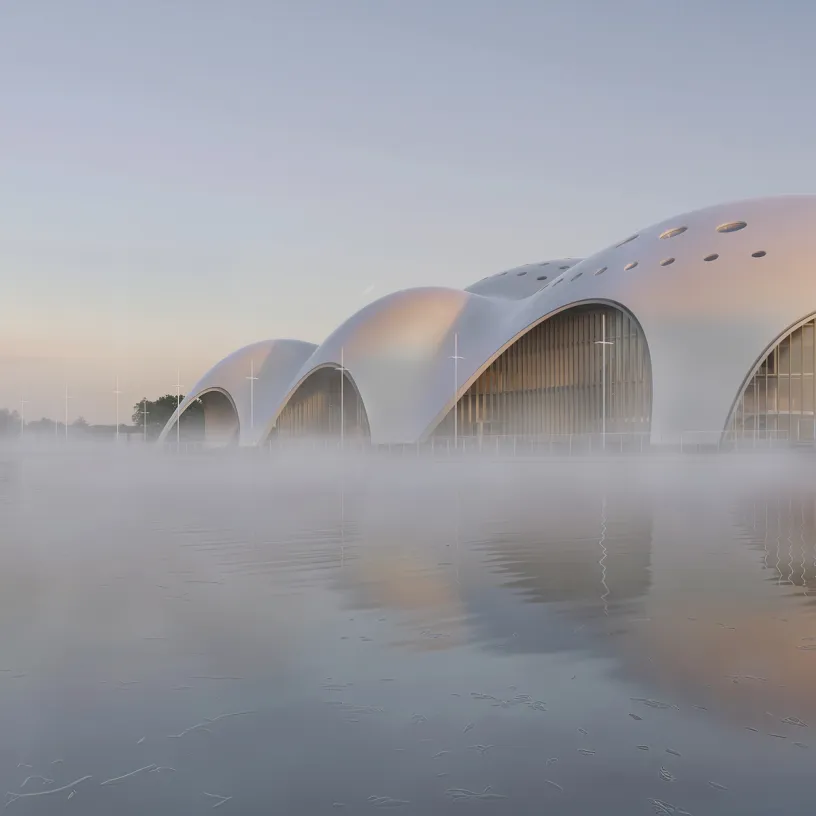
At IDM, a thin concrete catenary dome serves as the primary structural element. Engineered to be self-supporting, it spans a vast area with minimal material. Six catenary domes of varying size define the different functions of the complex, blending into one another to form a gentle, unified shell.
At their peaks, the domes are just 20 centimeters thick. Between them, structural valleys with deeper cross-sections direct loads to the ground. This stable and efficient system, “the Shell,” spans the two main auditoria and the surrounding spaces, supported by the valleys and four central columns.
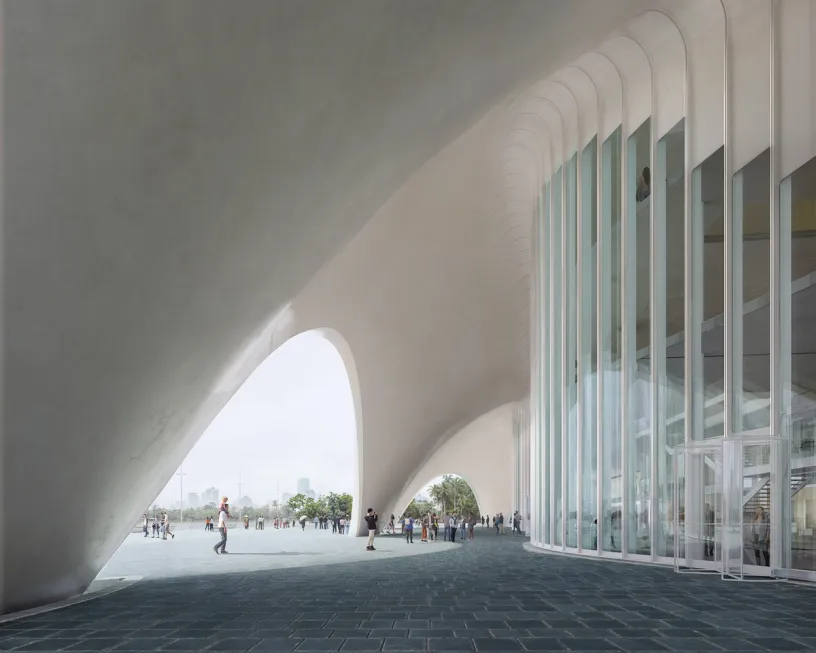
Arched and circular openings punctuate the valleys, forming an architectural language that reinforces the image of a structure emerging organically from the island.
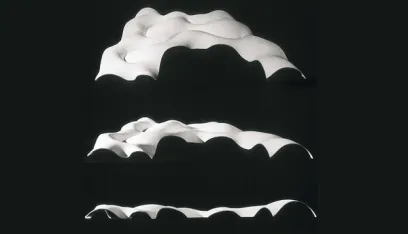
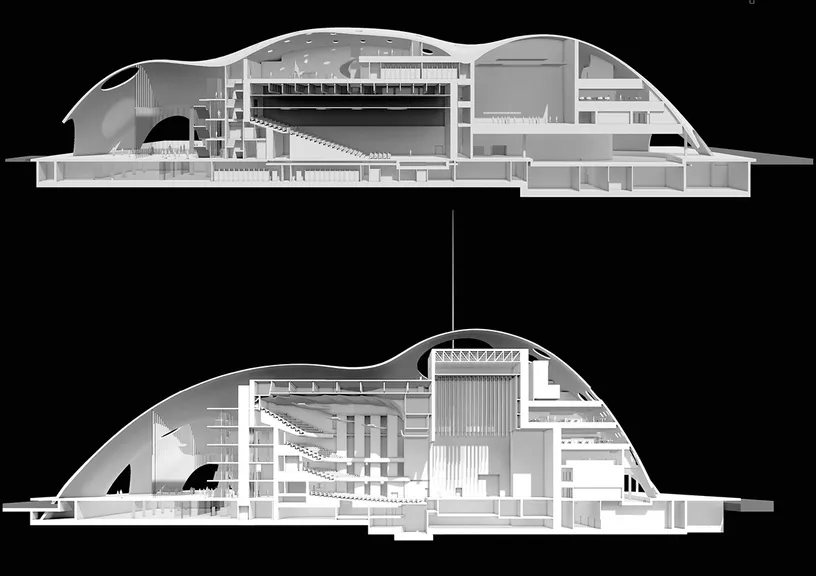
Inside the shell, a secondary structure rises to define the theatre’s interior spaces. Once inside, visitors will perceive the coherence between the outer shell and the interior volumes, embodied in the undulating facade of the Opera House, and unified with the shell’s underside. The space between the shell and the inner building becomes a continuous arcade, where shell and façade merge and seamlessly appear as one.
The duality of materials plays a central role: the underside of the shell, with its mineral concrete finish, evokes the tectonic forces channeled to the ground. Meanwhile, the exterior is clad in small circular ceramic tiles, making the IDM appear as a gentle creature emerging from water. A mother-of-pearl glaze allows the ceramic skin to reflect the sky and its surroundings in soft iridescent tones.
By coincidence, this vision recalls the lake’s history, when local farmers once made a living harvesting Trai, a large freshwater oyster that produced a rare variety of pearls in the waters of West Lake.
Project Details
Status
Client
Sun Group
Design
Renzo Piano Building Workshop, architects
in collaboration with PTW Architects (Sydney, Hanoi)
Design Team
G.Bianchi, V.Laffineur (partner and associate in charge)